
From Warehouse to Customer: Speeding Up Packaging Processes Without Extra Staff
· by Editorial team
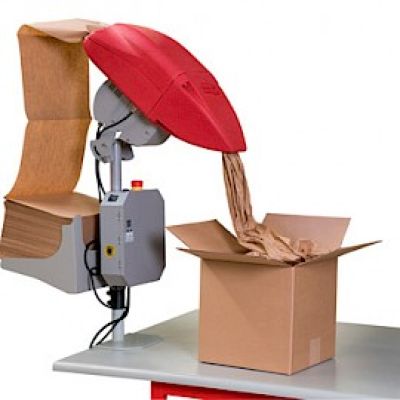
Packaging processes can be accelerated above all through faster cushioning systems, fewer manual steps per parcel and a well-planned packing station layout, entirely without additional staff. Replacing manual cutting and material changes with on-demand systems gains seconds per consignment, which add up over the day to noticeable extra capacity. The decisive step is to identify the bottleneck at the packing station and relieve it in a targeted way.
Between picking in the warehouse and the consignment ready for collection often lies the real bottleneck: the packing station. This is where it is decided how many orders a team can handle per shift. Rising order numbers quickly trigger the reflex to hire more people, yet in many businesses there is still considerable potential in the process itself. With the right systems and workflows, throughput can be increased without staffing costs growing alongside it.
Where in the packaging process is the most time lost?
The biggest time wasters are rarely where you expect them. Often it is the many small manual steps: searching for the right box, cutting cushioning material by hand, replenishing empty rolls or switching between different materials. Each of these steps costs only a few seconds, but multiplied by hundreds of consignments a day this becomes a considerable loss.
A second point is walking time at the packing station. If material, boxes and tools are not arranged within easy reach, every member of staff covers unnecessary distances. Oversized boxes also take their toll twice over: they need more void fill and slow down sealing. Made-to-measure shipping boxes and custom boxes reduce both, because less void means less void fill and faster handling.
The third factor is the cushioning itself. Anyone still stuffing voids by hand with pre-made material is working more slowly than necessary. Modern air cushion systems and paper cushioning solutions produce the void fill directly at the packing station at the push of a button, in exactly the quantity required.
How exactly do on-demand systems speed up packing?
On demand means that the cushioning material is only created at the moment of packing, right next to the consignment. This saves storage space for pre-made material and shortens reach distances. The Fill Air Rocket packaging system, for example, is designed for high throughput in mail-order shipping: it produces air cushions compactly at the packing station and so reduces the replenishment of roll stock.
If you rely on foam cushions for sensitive or irregularly shaped products, the INSTAPAK SpeedyPacker takes over bag production fully automatically and is therefore tailored to high-volume shipping. Where precisely fitting moulded parts are required, the INSTAPAK iMold produces moulded cushions automatically, taking recurring manual work steps off the team.
If you want to make the process more sustainable while keeping up the pace, the FASFIL EZ paper void fill offers a solution for fast packing lines. The PaperEZ Bubble also produces paper cushions on demand and can be integrated into the workflow as an alternative to film-based material. The common denominator of all these systems: fewer manual steps, fewer material changes, more finished parcels per hour.
Matching product: Shipping boxes & custom boxes | FUCHSPACK Sturdy folding boxes and individual custom boxes for every application. Made-to-measure solutions reduce shipping costs & damage. Request a quote now! More about shipping boxes & custom boxes | FUCHSPACK →
Related to this article: Versandkartons & Kartonagen nach Maß | FUCHSPACK Stabile Faltkartons und individuelle Kartonagen für jeden Einsatzzweck. Passgenaue Lösungen reduzieren Versandkosten & Schäden. Jetzt Angebot anfordern! More about Versandkartons & Kartonagen nach Maß | FUCHSPACK →
How do I set up the packing station for more throughput?
Technology alone is not enough. The organisation has to be right too. Arrange boxes, cushioning system, tape and label printer so that they can be reached without changing grip. A well-planned packing station follows the sequence of work steps: insert goods, cushion, seal, label. The shorter the distances between these stations, the less idle time.
Also reduce the number of box sizes to a sensible standard range. Fewer variants mean faster decisions and less search time. For mail-order businesses with high unit volumes and the goal of low returns, it is worth looking at the specialised e-commerce packaging solutions, which are tailored precisely to this use case.
Last but not least: measure the current state before you optimise. How many parcels does a packing station manage per hour today? Where do waiting times arise? Only once the bottleneck has been named can you invest in a targeted way, instead of across the board in more staff.
Frequently asked questions (FAQ)
Can I really increase throughput without more staff?
In many businesses there is untapped potential in the process. Faster cushioning systems, shorter distances and a tidy packing station increase the number of consignments per hour without the team having to grow.
Which cushioning system suits my business?
That depends on your products and unit volumes: air cushions for light goods, foam for sensitive or irregularly shaped items, paper for sustainable shipping. A consultation helps to find the right system for your needs.
Is switching worthwhile even for smaller quantities?
Even at medium shipping volumes, shorter reach distances and fewer material changes pay off. Compact systems can be integrated into existing packing stations in a space-saving way.
What is the best way to start?
First analyse your current bottleneck and your typical consignments. On this basis the right system can be selected, ideally together with a packaging specialist.
Transparency note: This article was created with AI assistance and reviewed by our editorial team. The article image is AI-generated.