
Reducing Packaging Costs: How to Eliminate Hidden Cost Drivers in Your Shipping
· by Editorial team
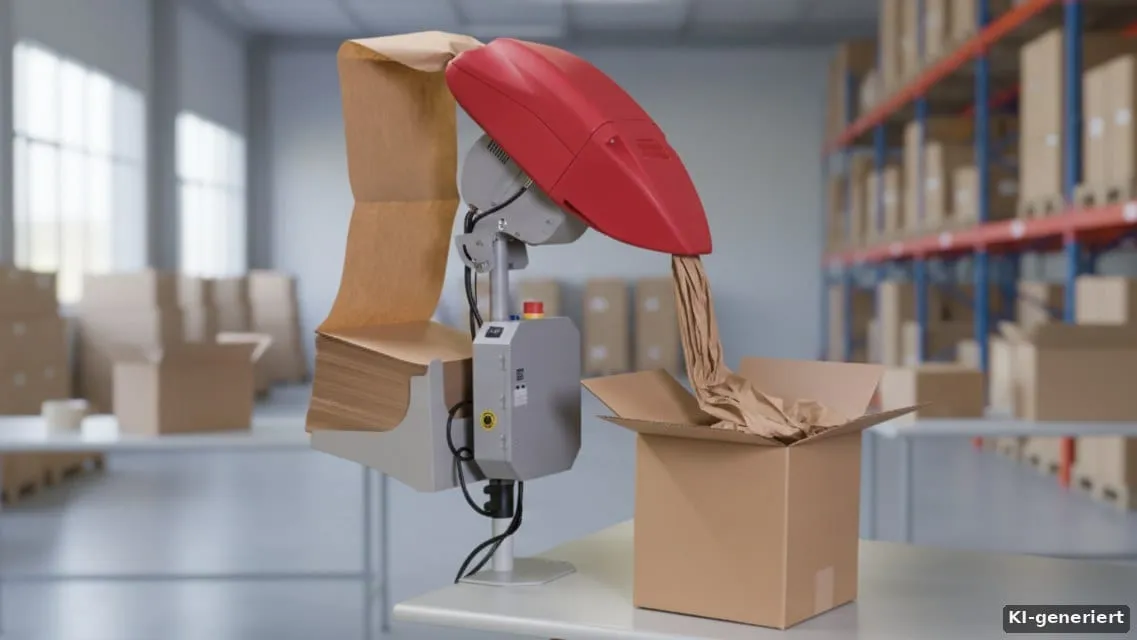
The most expensive packaging costs rarely appear on the material invoice. They hide in volumetric weight, in long packing times, in consignments that come back damaged and in material that takes up costly storage space. If you make these four items visible and coordinate boxes, cushioning system and packing process, you noticeably reduce your shipping costs, without compromising on protection. This is exactly where FUCHSPACK comes in, with made-to-measure boxes and efficient cushioning systems.
If you want to reduce your shipping costs, most businesses first look at the purchase price of boxes and void fill. That is understandable, but it falls short. The really big levers lie in places that never appear on a supplier invoice: in the postage you pay for air, in the working time at every single packing station, in every return caused by transit damage and in the capital tied up in full warehouse shelves. These four items determine your total costs, and they can be influenced in a targeted way.
Why does volume cost you more than weight?
Many carriers have long been charging by volumetric weight rather than by the actual weight of your consignment. This means that a light product in an oversized box is billed as if the entire box were completely full. In other words, you pay for air, with every single consignment, month after month.
This effect is insidious because it does not show up as a separate cost item. It hides in the postage invoice, where it is rarely questioned. An oversized box can push a consignment into the next price bracket even though the contents weigh hardly anything. Over hundreds or thousands of parcels this adds up to an amount that dwarfs any saving on material.
The starting point is box size. With made-to-measure shipping boxes you bring the volume back down to what is necessary and lift your consignments out of expensive price brackets. For this, FUCHSPACK offers sturdy folding boxes and individual custom boxes for a wide variety of applications: the first lever against hidden postage costs.
How much is the time at the packing station actually costing you?
The second invisible item is working time. Every consignment that is assembled, cushioned and sealed costs staff time, and this time appears on no packaging invoice. Especially in manual processes, where void fill is taken from a supply bin and stuffed loosely into the void, valuable time is lost on every parcel.
Here it pays to look at the packing process rather than just the material. Systems that produce cushions on demand directly at the workstation shorten the time per consignment, because the trip to the supply store is eliminated and the material is created to fit precisely. FUCHSPACK offers a broad spectrum for this: air cushion systems such as NewAir I.B. Flex and Fill Air Rocket produce the cushion directly at the packing station, while paper cushioning systems such as FASFIL EZ or PaperEZ Paper Bubble produce sustainable cushions in step with your packing line. At high throughput, every second saved per parcel is clearly noticeable at the end of the month.
Why are returns caused by transit damage a cost driver?
A consignment that comes back damaged is by far the most expensive packaging you can afford. You pay double postage, the processing of the return, a replacement delivery, and in the worst case you risk losing the customer altogether. The actual trigger often lies in the packaging concept: if a product has too much play in the box, it shifts during transit and is damaged.
Protection therefore decides not only customer satisfaction but directly your cost ratio. For sensitive technology or complex geometries, suspension packaging retains the product instead of merely enclosing it, and foam packaging such as INSTAPAK adapts to the shape of your product. Your returns rate due to transit damage is the most honest indicator here: if it falls, your packaging concept is working.
How does made-to-measure packaging free up tied-up stock capital?
The fourth hidden item is storage space. Anyone who keeps many different box formats and litres of loose void fill in stock ties up capital and shelf space, space that you pay for whether it is used or not. Compact material rolls and cushions produced on demand, by contrast, need a fraction of the space.
Paper-based systems play to their strengths here: they can be stored in a space-saving way and only converted into cushions at the packing station. Less material in storage means less tied-up capital and more free space. FUCHSPACK covers this range from air cushion and paper cushioning to foam packaging solutions, so that you can streamline your range to a few efficient systems.
Conclusion: making the invisible costs visible
Your biggest savings come not from the cheapest material but from where costs have so far arisen unnoticed: in volumetric weight, in packing time, in damage returns and in tied-up stock capital. Treat boxes, cushioning and process as one coherent system that matches your product and shipping volume, and postage, working time, returns and storage costs will all fall together.
Matching product: Shipping boxes & custom boxes | FUCHSPACK Sturdy folding boxes and individual custom boxes for every application. Made-to-measure solutions reduce shipping costs & damage. Request a quote now! More about shipping boxes & custom boxes | FUCHSPACK →
Related to this article: Versandkartons & Kartonagen nach Maß | FUCHSPACK Stabile Faltkartons und individuelle Kartonagen für jeden Einsatzzweck. Passgenaue Lösungen reduzieren Versandkosten & Schäden. Jetzt Angebot anfordern! More about Versandkartons & Kartonagen nach Maß | FUCHSPACK →
Frequently asked questions
How can I tell that I am paying for volume rather than weight?
Compare the actual weight of your typical consignment with the price bracket on your postage invoice. If you are paying conspicuously much for light parcels, the box is usually too large and volumetric weight is the reason.
How do I reduce packing time without reducing protection?
Rely on systems that produce cushions on demand directly at the packing station. The trip to the supply store is eliminated and the material is created to fit precisely: protection stays the same, the time per consignment falls.
Is transit damage really a relevant cost factor?
Yes. A single damage return causes double postage, processing and a replacement delivery. A made-to-measure retention or cushioning system lowers this rate and with it one of the most expensive hidden items.
Where should I start first?
Begin with your most frequent consignments. If box size and cushioning system are optimal there, you have already used the greatest lever. For the specific selection, an individual consultation is worthwhile.
Transparency note: This article was created with AI assistance and reviewed by our editorial team. The article image is AI-generated.