
Packaging 2026: trends and standards you need to know today
· by Editorial team
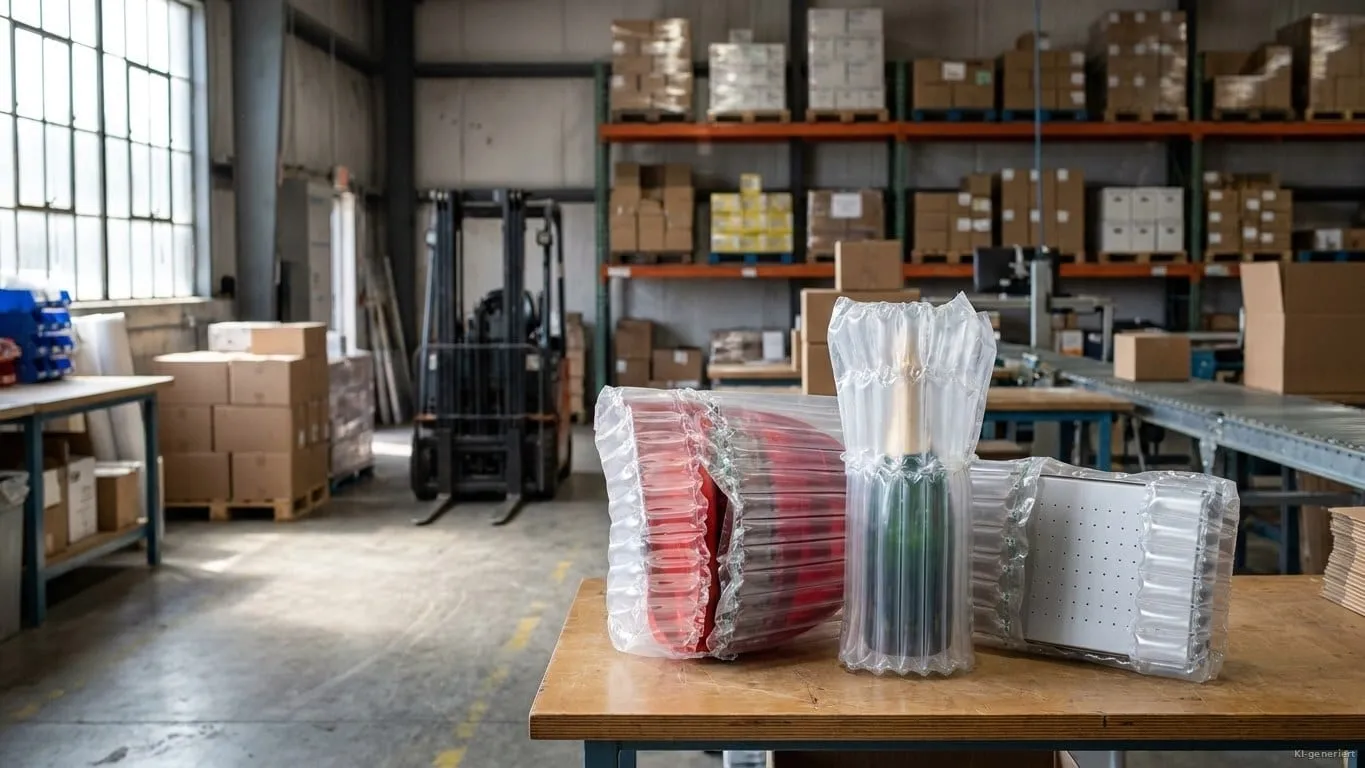
Key facts at a glance: In 2026, packaging determines cost, protection and customer satisfaction in shipping more than ever. Anyone who relies today on needs-based cushioning systems, resource-saving materials and lean packing processes is prepared for the requirements of the coming years. At FUCHSPACK, we support you in future-proofing your shipping, from material selection to the optimised packing station.
The shipping market is changing fast: rising transport prices, growing expectations around sustainability and the constant pressure to make processes more efficient. For shippers, this means regularly questioning their own packaging strategy. What was up to date yesterday can become a cost driver today. In this article, we show you the key developments you should keep an eye on in 2026, and how to turn them into concrete advantages for your shipping.
Which packaging trends are shaping 2026?
One trend runs through almost every industry: away from the standard, towards the precisely fitting solution. More and more shippers are recognising that the right packaging not only protects, but actively reduces costs and improves the brand experience.
This is particularly visible in void fill and cushioning materials. Conventional plastic films are facing growing competition from paper-based systems. With our paper cushioning, voids can be filled reliably and sensitive products held in place, using a material that can be disposed of easily via the paper recycling stream. At the same time, efficient air cushion systems remain attractive for many shippers because they produce a large volume of protective cushioning from minimal material.
A second trend is the customisation of the outer packaging itself. Precisely fitting shipping boxes and custom boxes reduce empty space and with it both the need for void fill and the volume shipped. In e-commerce in particular, this has a direct effect on shipping costs and the returns rate: a box that fits the product protects it better and makes a professional impression on unboxing.
Why are standards and processes becoming ever more important?
In 2026, standards concern two levels: the external framework and internal reliability. On the one hand, trading partners and customers increasingly expect resource-saving, clean packaging. On the other hand, it is about standardised, repeatable procedures at the packing station, because only what works reliably can be scaled.
On-demand production plays a central role here. Instead of stocking pre-made cushions, modern systems produce the protective material directly at the packing station, in exactly the quantity required. This reduces tied-up storage space and ensures consistent quality: every shipment is cushioned to the same standard, regardless of who packs it.
For industries with special requirements, it is worth looking at specialised solutions. Whether sensitive electronics, heavy components or delicate goods: our industry solutions are designed to define the right protection standard for every application. This turns generic packaging into a plannable, process-reliable component of your shipping.
Matching product: Sustainable paper cushioning | FUCHSPACK Environmentally friendly & robust: paper cushioning systems for eco-friendly shipping. Flexible for cushioning & retention. Switch to paper now! More about sustainable paper cushioning | FUCHSPACK →
Related to this article: Nachhaltige Papierpolster-Verpackungen | FUCHSPACK Umweltfreundlich & belastbar: Papierpolstersysteme für ökologischen Versand. Flexibel einsetzbar zum Polstern & Fixieren. Jetzt auf Papier umsteigen! More about Nachhaltige Papierpolster-Verpackungen | FUCHSPACK →
How do you future-proof your shipping today?
Future-proofing does not come from a single major overhaul, but from the interplay of several adjustable factors. Three approaches have proven themselves:
- Choose materials deliberately: Check where paper-based or particularly material-efficient cushioning systems can be used sensibly, often without compromising on protection.
- Reduce volume: Made-to-measure boxes save void fill, freight volume and handling time at the same time.
- Standardise processes: A well-designed packing station with on-demand cushioning ensures consistent quality and makes your shipping less dependent on individual people.
The decisive point is to coordinate these elements with one another. Packaging that fits the product, the shipping route and your own process is almost always cheaper and more robust than a standard solution, and it meets the growing expectations of responsible shipping at the same time.
Frequently asked questions
Do I have to completely change my packaging in 2026?
No. In most cases, targeted adjustments deliver the greatest effect, such as switching a void fill material, better-fitting boxes or an optimised packing station. We look at your specific shipping operation and start where the benefit is greatest.
Are paper-based cushions as safe as plastic?
For many applications, yes. Paper cushions can be used flexibly for void fill and retention. Which system suits your products depends on weight, sensitivity and shipping route, and we are happy to advise you individually.
Is on-demand cushioning worthwhile for smaller shipping volumes too?
Often, yes, because less material needs to be kept in stock and quality remains constant. There are compact systems as well as high-performance ones, so a suitable solution can be found for different shipping volumes.
How do I find the right combination for my shipping?
Fastest in direct dialogue. We analyse your products, your processes and your goals, and develop a packaging concept from them that works today and is ready for future requirements.
Transparency note: This article was created with AI assistance and reviewed by our editorial team. The article image is AI-generated.